
Divergent impacts of climate interventions on China’s north-south water divide
Climate interventions may lead to distinct hydroclimatic responses across China, highlighting important regional trade-offs.
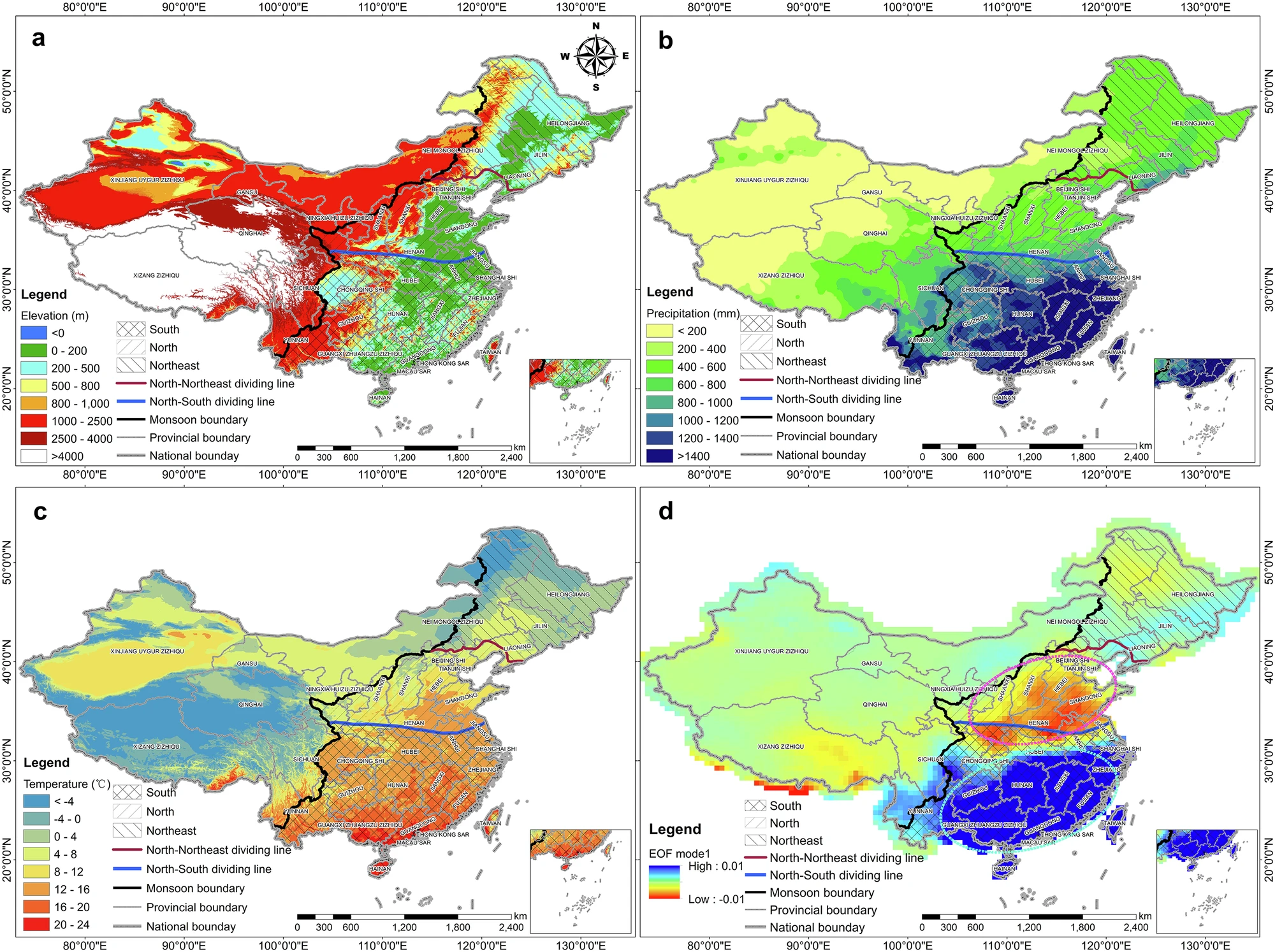
This study examines how different climate intervention approaches could alter the North Drought-South Flood pattern and reshape water resources across China’s monsoon region.
The results suggest that stratospheric aerosol injection (SAI) could partially mitigate the north-south water divide by increasing runoff in northern China while reducing it in the south.
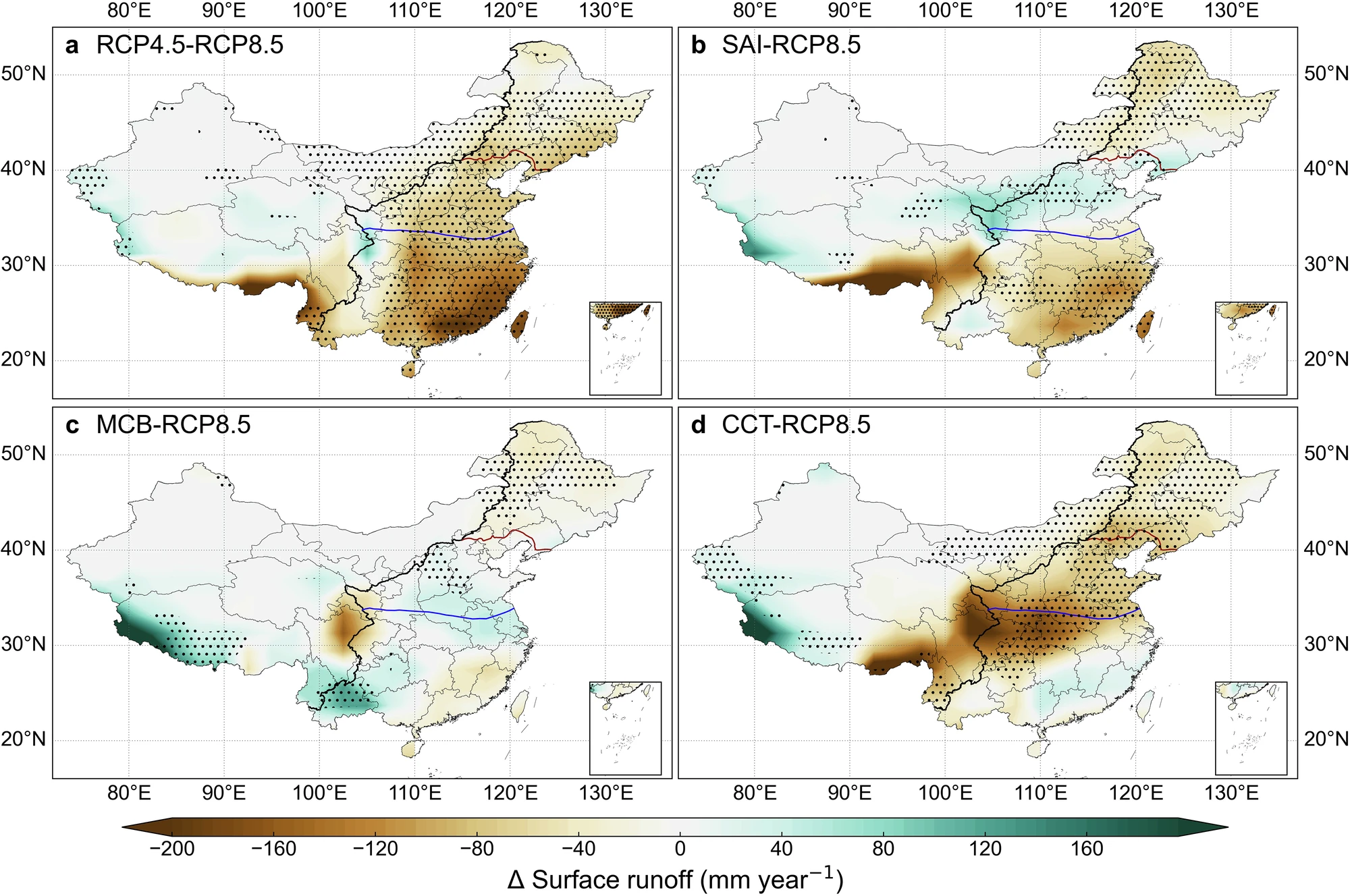
Different interventions are not equivalent: marine cloud brightening may intensify southern flood risk, while cirrus cloud thinning may worsen northern drought.
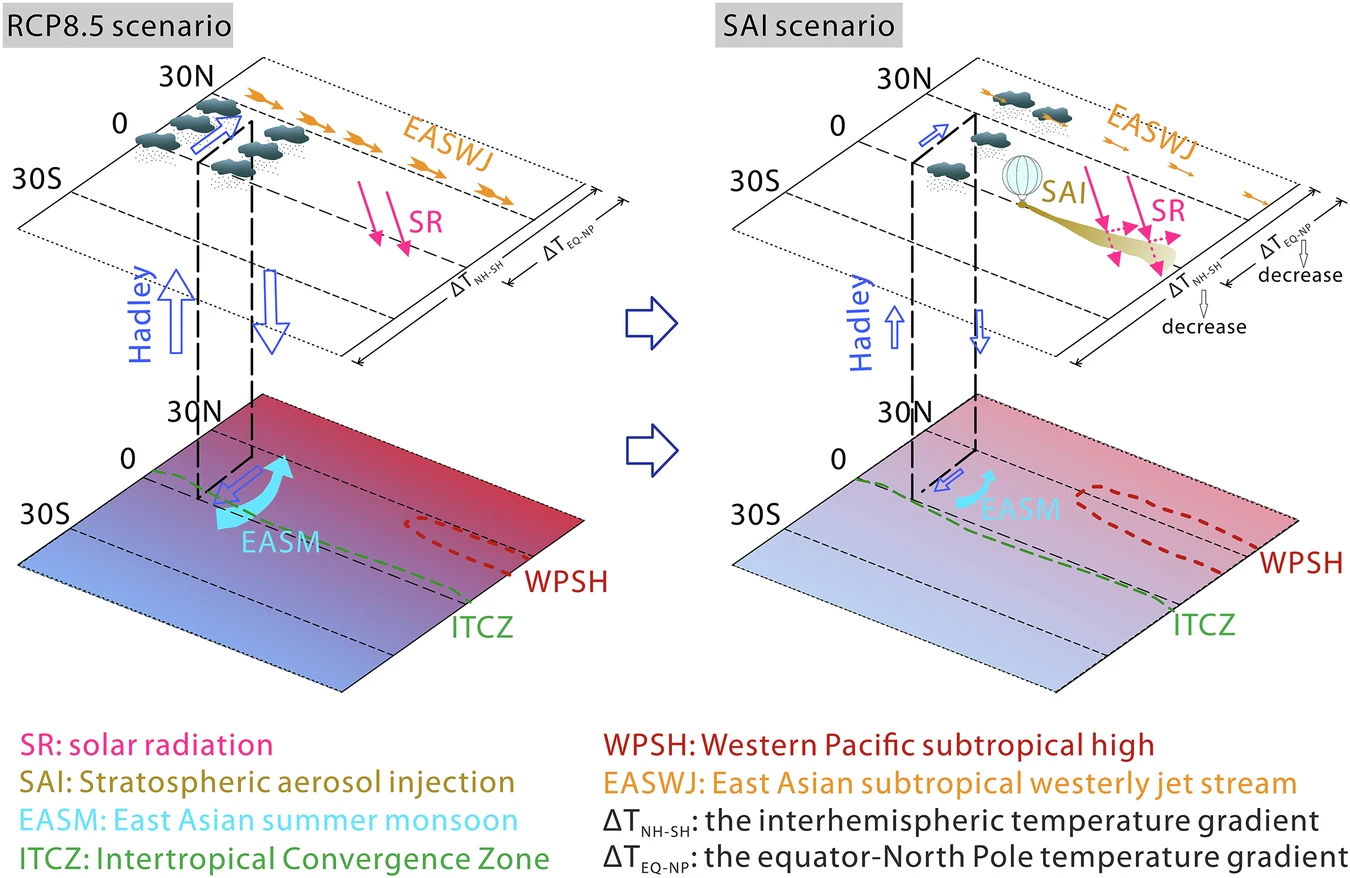
Mechanistically, SAI alters atmospheric temperature gradients and circulation, influencing the East Asian monsoon and the Western Pacific subtropical high, which in turn shifts rainfall and runoff patterns.
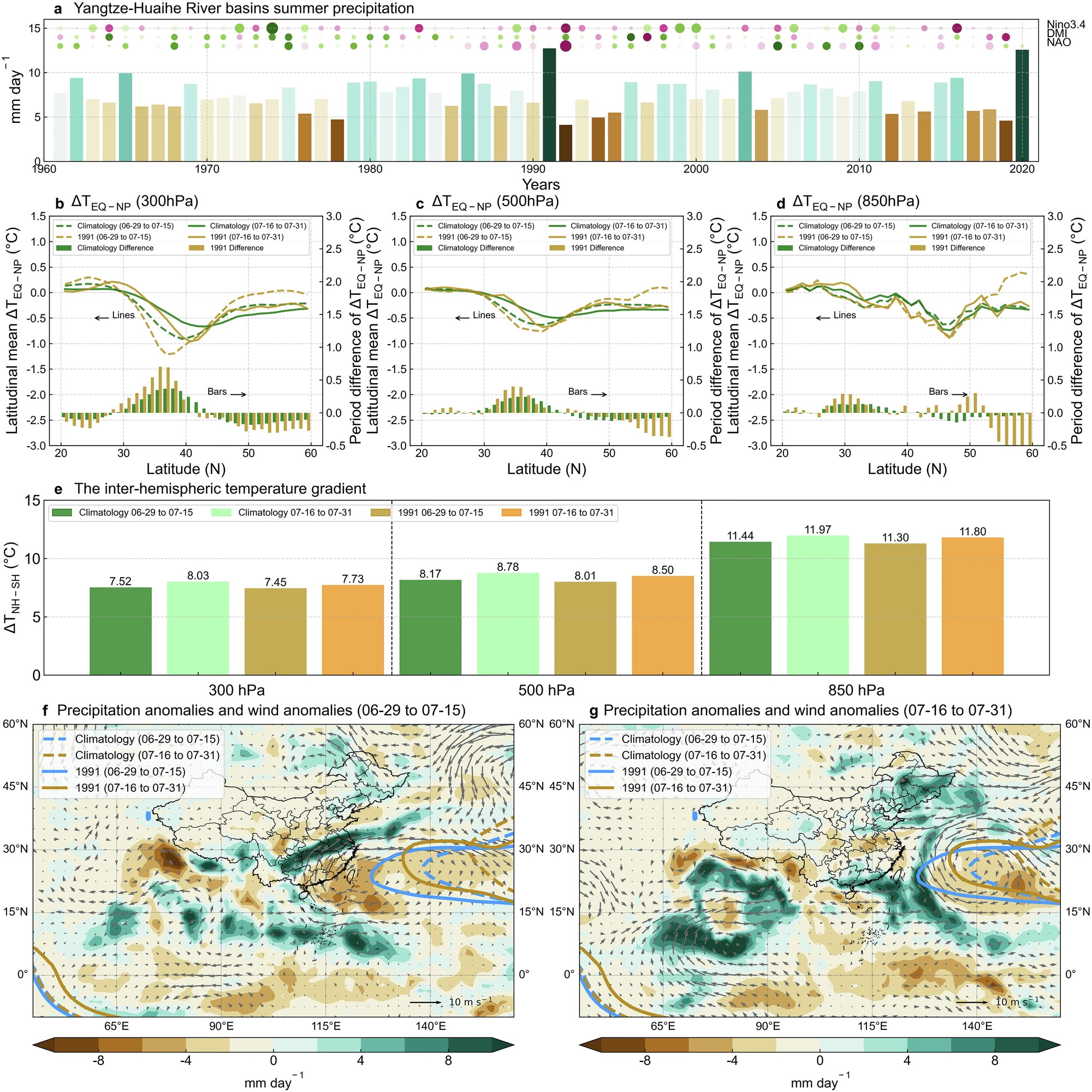
Observations following the 1991 Mount Pinatubo eruption provide additional support for the mechanism, consistent with a near-equatorial SAI analogue.
“Climate interventions are not one-size-fits-all; regional differences determine that their benefits and risks can be very different from place to place.”